Water Extraction in Newport, RI
The supply line to the second-floor bath in a Kay Street Victorian let go while you were across the bridge in Jamestown, and it ran most of the day. The bathroom floor is under water, the hall runner is soaked to the stairs, and it is coming through the parlor ceiling below in three places. This site puts you through by phone to an independent local provider who extracts water from houses in Newport and across Newport County.
Getting the bulk water off old floors before it goes lower
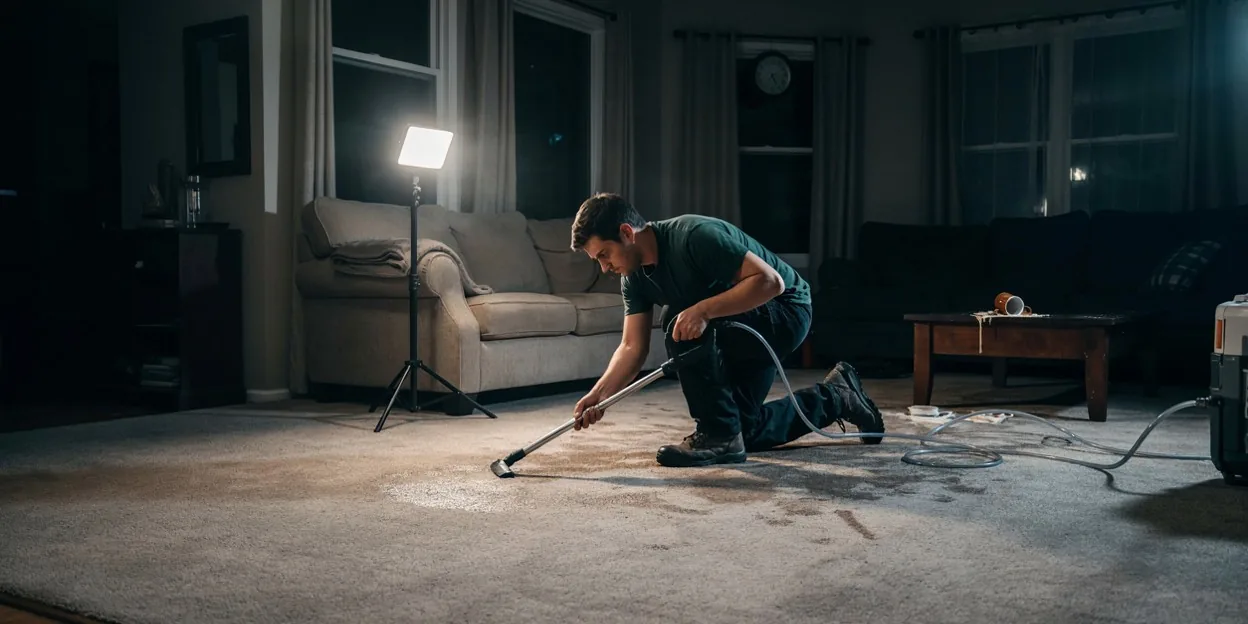
Extraction is the part that cannot wait, because every hour the water sits it soaks deeper into wide boards, subfloor, and the base of plaster walls. The crew brings a truck-mounted or portable extractor and pulls standing water off tile, carpet, brick, and painted pine. On carpet they use a weighted tool that squeezes the pad through the carpet. On wide old boards they work fast and gently, because the boards will cup if they stay wet and split if they are dried too hard.
Then they take the first readings on every surface the water could have reached: the subfloor under the hall, the base of each wall, the ceiling below, and the cellar timbers under all of it. Those first numbers become the map the drying crew works from.
What to do in the hour before the extractor arrives
Close the main shutoff at the front foundation wall if the water came from a pipe. Trip the breaker for any room where the water has reached an outlet or a floor lamp. Roll up rugs, put furniture legs on foil or blocks, and carry anything cardboard to a dry floor. Open cabinet doors under sinks. Photograph the hall, the bath, and the parlor ceiling as you found them, then once more after the furniture is out of the way. If the water reached the cellar, do not go down there until the power is off. Say when you call whether any of the water is salt.
Which materials come back and which come out
A clean supply-line leak is the gentlest kind of loss an old house can have. Old pine boards usually dry in place if the crew reaches them within a day or two, and so do joists and studs. Horsehair plaster that metered wet at the base is often dried from the cavity side rather than cut, because the plaster is worth more than the drywall that would replace it. Modern laminate almost always comes out, since the core swells and does not go back. A ceiling that took water from above is opened at its low point so the cavity can drain and dry and so the plaster does not come down on its own. With the standing water out, the rest of the work is structural drying against the readings.
Water from the harbor, the bay, or a backed-up drain is a different category, and the crew treats it that way. Carpet, pad, and anything porous it touched are removed rather than dried. Say where the water came from when you call so the provider arrives ready for it.
How water travels through a Newport house
A house on the Point or Historic Hill has a cellar with a brick or dirt floor, first-floor joists sitting on a sill just above the stone, and two or three stories of wood floors stacked on top. Water on the second floor follows the plumbing chase and the stair to the first floor, then drips through the boards into the cellar and lands on the sill. A Fifth Ward two-family built in the 1890s shares one set of pipes between two kitchens, so a leak upstairs is often two apartments wet.
Winter adds its own losses. A pipe that froze in an outside wall on a January night leaks when the thaw comes, and by then the wall has been wet for a day. That job is a frozen pipe cleanup, and the extractor comes in first. Harbor water that came over Wellington Avenue on a nor'easter tide is a storm surge and coastal flood cleanup, and the extraction there starts in the cellar.
Calling about standing water in Newport
Say which floor the water is on, whether it came from a pipe, the roof, or the sea, whether the main is off, and whether it reached the cellar. Call (401) 560-5802.